
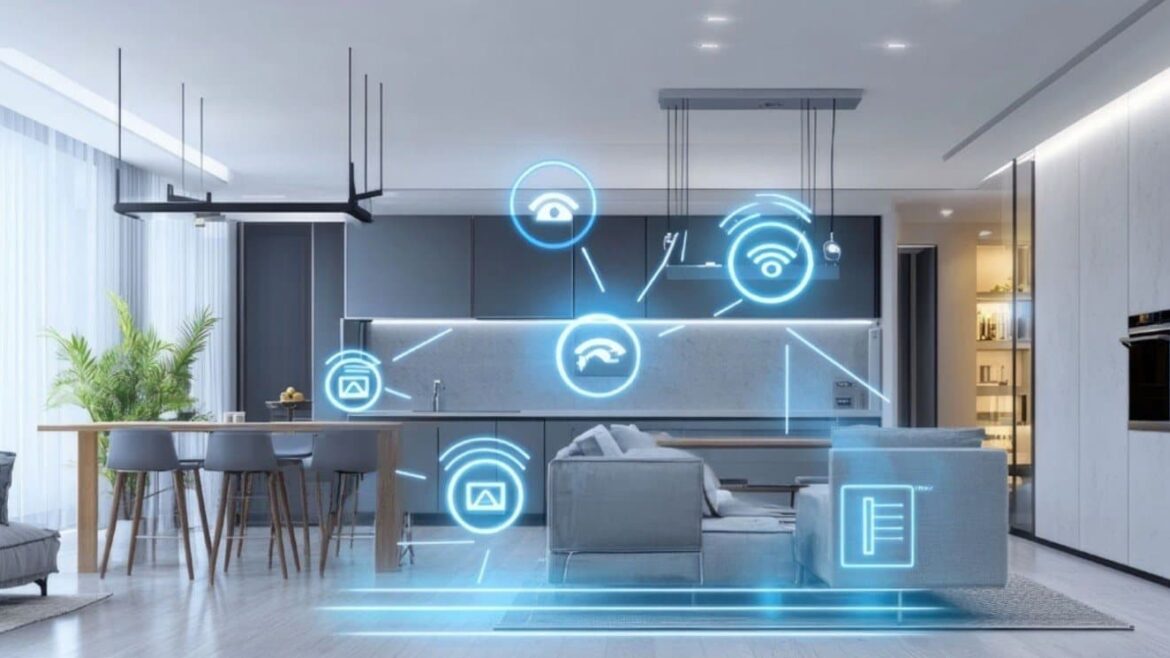
Invisible Technologies in Interior Design: How to Create an Elegant Smart Space
Clients increasingly want smart spaces, but they almost never want their interiors to look like a technology showroom. And this is a very telling shift. In 2026, the premium request no longer sounds like “add more gadgets” but rather “make everything work conveniently, beautifully, and almost invisibly”.
In hospitality and luxury residential projects, this approach has already become a distinct trend. Hospitality Net identifies human-tech balance as one of the key directions for 2026 — the balance between technology and human experience.
Meanwhile, Club Quarters Hotels CEO John Paul Nichols puts it even more simply: “striking the right balance between technological innovation and the human touch is no longer optional.”
Why a “Smart Interior” in 2026 Is No Longer About the Wow Effect but About Quality of Life
Just a few years ago, smart solutions were often perceived as something highly demonstrative: voice control, numerous automation scenarios, bright control panels, and a dramatic presentation of features. Today, everything is different. In modern premium interior design, technology should not distract attention — it should work quietly in the background.
This shift is clearly reflected in the market. According to Grand View Research, the European smart home market is expected to grow by more than 26% CAGR between 2025 and 2030, with demand for integrated smart technologies increasing especially rapidly in new construction projects. Researchers also highlight the trend of “smart homes from the ground up,” where automation is incorporated during the design stage rather than added later as separate components.
For a studio that provides turnkey interior design services, this is an important signal. Clients no longer want to simply add a few outlets and sensors. They want the entire space to function as one cohesive system from the start: lighting, climate control, security, curtains, access management, and sound.
What “Invisible Technologies” Mean in Practice
Invisible technologies do not mean avoiding smart solutions. Quite the opposite. It is an approach in which technology is integrated so seamlessly that it never becomes the center of attention.
In residential interiors, this may include:
- hidden lighting controls;
- automated curtains with invisible mechanisms;
- climate control systems without visually dominant technical units;
- smart locks and access systems without visual clutter;
- “morning,” “evening,” “away,” and “guest” scenarios activated with a single touch.
In commercial projects such as hotel design and restaurant design, invisible technologies become even more valuable. Guests should not have to think about the systems around them. They should simply experience comfortable lighting, the right atmosphere, and effortless access to the space.
That is why technology in modern turnkey hotel design and turnkey restaurant design is increasingly integrated as part of the architecture itself rather than as an additional feature.
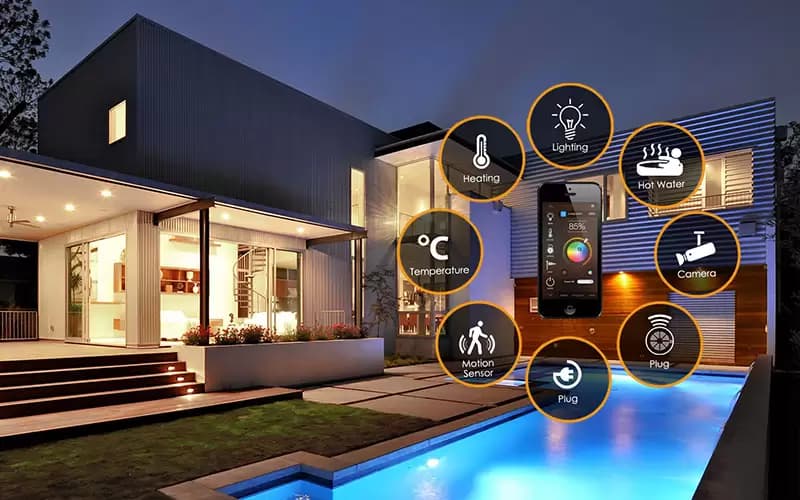
Where Smart Solutions Truly Enhance a Space
Lighting
Lighting is perhaps the best example of how technology can be completely invisible yet highly impactful. When lighting scenarios are thoughtfully designed, a space can change its mood depending on the time of day, the occasion, or the user’s needs.
For hotel interior design, this means a higher level of comfort in guest rooms. For restaurant interior design, it means a stronger evening atmosphere and often a higher average guest spend because visitors tend to stay longer in the space.
Climate and Comfort
A smart space is not only about lighting. It also includes temperature, ventilation, air quality, and microclimate scenarios. These are often things people cannot clearly describe, yet they notice them immediately.
In luxury residential projects, this is especially important because clients are not simply buying a renovation — they are investing in flawless everyday comfort. A smart climate system that operates quietly and intuitively often delivers more value than any highly visible gadget.
Access and Security
Smart locks, access control, contactless entry, and integration with mobile devices have long moved beyond the category of technical add-ons. In 2026, they are an essential part of an elegant user experience for both residential and hospitality projects.
Grand View Research notes that security and access controls represented the largest segment of the smart home market in 2024.
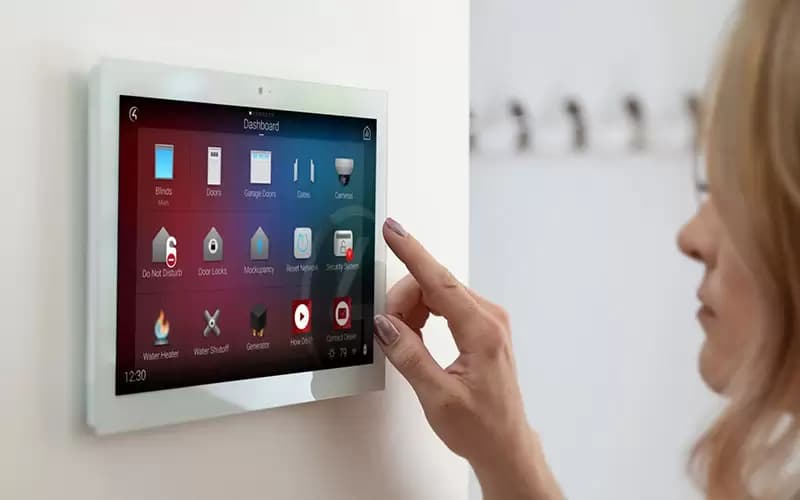
Why Clients Want Smart Solutions but Not a “Technical” Interior
Because premium interiors today are judged not by the number of features they contain, but by how elegantly and invisibly those features work.
If a space is filled with visible panels, bright displays, excessive electronics, and complicated controls, it quickly loses its sense of elegance. It begins to feel either overly corporate or excessively showy.
This is precisely why the concept of human-tech balance, highlighted by Hospitality Net, has become so important: technology should enhance the experience of residents and guests, not dominate it.
In practice, the best smart solutions are those that make people think, “This is simply very comfortable,” rather than “What an impressive system.”
How to Make a Smart Space Feel Luxurious Rather Than Technical
1. Minimize Visual Noise
Fewer control panels, visible devices, random buttons, and exposed technical elements. The cleaner the surfaces, the more premium the interior appears.
2. Integrate Technology During the Concept Stage
When smart solutions are added after an interior has already been approved, compromises are almost inevitable. When they are planned from the beginning, they can be seamlessly integrated into custom joinery, walls, furniture, lighting niches, and automation scenarios.
3. Focus on Materials Rather Than Technology Displays
Natural wood, stone, metal, glass, and textiles help incorporate technology without disrupting the atmosphere of a space.
4. Keep Controls Simple
The more complicated technology appears on the surface, the more frustrating it becomes. High-quality turnkey interior design includes intuitive scenarios that are convenient to use every day, not just impressive during the first week after completion.
How This Works in Hotel and Restaurant Design
In hotel and restaurant projects, smart integration is particularly valuable because it affects not only aesthetics but also business performance.
In hotel interior design, this may include:
- contactless room access;
- automated lighting scenarios;
- smart climate control;
- automated curtain and blackout systems;
- energy-efficient solutions that reduce operational costs.
In restaurant interior design, this may include:
- lighting scenarios for different times of day;
- acoustic and atmosphere control;
- automated comfort systems;
- technology integration that preserves aesthetics and photogenic appeal.
According to Skift and Oracle Hospitality, 53.6% of travelers in 2025 wanted hotels to consistently provide contactless check-in/check-out, digital keys, and real-time messaging. This demonstrates that demand for technology has not disappeared — clients simply expect it to be integrated more elegantly.
When a Client Is Ready to Order Interior Design with Smart Integration
There are several common indicators:
- you want a modern space but are concerned about making it feel too technical;
- you need a premium interior focused on comfort rather than display;
- you plan to order hotel design or restaurant design where both functionality and emotional impact matter;
- you care not only about style but also about how the space will be used;
- questions about interior design costs are already being considered alongside durability and convenience.
This is the stage where a design studio can demonstrate real expertise. Smart solutions are no longer just a technical package — they are part of the overall vision.
How Cult of Design Approaches This
At Cult of Design, smart solutions are designed to support the atmosphere, not compete with it. That is why technology is treated as part of a comprehensive approach — from planning and materials to lighting, furniture, and detailing.
This approach is particularly valuable for clients looking to order interior design, hotel design, or restaurant design without compromising either aesthetics or functionality. When everything is planned correctly, a smart space does not feel technical. It feels refined, calm, luxurious, and thoughtfully designed.
-
 Rectangle & Square House At Brooklyn July , 20th, 2018
 -
 Discover Architecture Of Bario Lodge July , 20th, 2018
 -
 Rennovate Exterior With Garden On Top July , 20th, 2018