
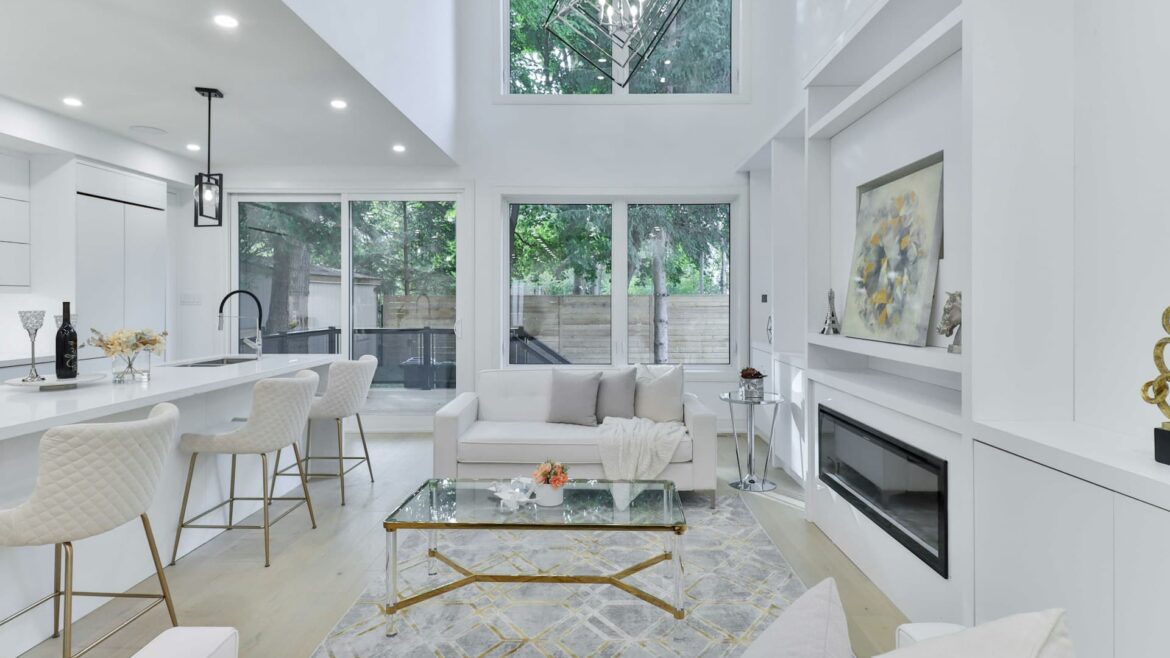
How AI Helps Before Renovation Begins: Fast Concepts, Visualizations, and Validation of Design Decisions
Before a renovation even begins, clients are usually less concerned about the construction process itself than about making the wrong design choices: the wrong atmosphere, unsuitable materials, excessive decoration, or an illogical layout. This is where AI becomes valuable—not as a “magic button,” but as a practical tool that allows ideas to be tested before they turn into expensive construction work and procurement. ArchDaily notes that AI has already become part of architects’ and designers’ daily workflow thanks to its speed, ability to generate multiple options, and support during the early stages of a project.
For you as a client, this means practical benefits: fewer decisions based on guesswork, faster concept approval, and a lower risk of costly redesigns. This is especially important not only for apartments, but also for villa design, hotel design, restaurant design, and public space design, where mistakes made at the concept stage can result in significant financial losses.
1. Approving the Style and Atmosphere Faster
AI is particularly effective at the very beginning of a project, when you may not yet be able to clearly define what you want. Instead of spending weeks searching for references, the design team can quickly generate several design directions: understated luxury, warm minimalism, boutique hotel mood, or a refined contemporary interior.
ArchDaily highlights that the greatest advantages of AI today are its speed and ability to generate multiple options. While it does not replace the designer’s taste and expertise, it significantly shortens the path to the first strong concept. You can identify much earlier what truly resonates with you—and what does not.
2. Testing Multiple Concepts Before Construction Starts
AI is especially useful when it is necessary to quickly evaluate:
- different design directions;
- various lighting scenarios;
- the density of decorative elements;
- material combinations;
- the overall character of the space.
Within the professional community, this is already common practice. According to ArchDaily, 64% of architects are already experimenting with AI in their daily work, while approximately 20% of firms have integrated it into several design processes.
For you, this means being able to review more alternatives before renovation begins and making decisions with greater confidence.
3. Evaluating Materials and Texture Combinations More Quickly
One of the most common mistakes is approving a beautiful concept that ultimately does not work with real materials. AI allows designers to quickly test combinations of wood, stone, metal, glass, textiles, warm or cooler lighting, dark or light surfaces long before implementation begins.
This is why the topic is closely connected to material selection. If you want not only attractive visualizations but also a deeper understanding of how materials work together, it is worth exploring current trends in luxury interior materials for 2026.
AI in interior design is an excellent environment for testing ideas. However, the final selection should always be made by a professional designer who understands how materials perform not only on screen but also in real life.
4. Identifying Risks Before They Become Expenses
The greatest value of AI before renovation lies not in creating impressive renderings but in helping eliminate weak design decisions before they become expensive mistakes.
These may include:
- overly heavy decoration;
- poor color balance;
- too many competing textures;
- the wrong atmosphere for the space;
- an insufficient level of premium quality.
This is particularly important because mistakes made during construction are expensive to correct. Houzz points out that poor budget planning and incorrect early decisions quickly become losses that cannot be recovered.
5. Where AI Is Most Useful Across Different Types of Projects
In villa design, AI helps quickly evaluate the atmosphere of private spaces such as the master bedroom, spa area, walk-in wardrobes, living room, and terrace.
In hotel design, it helps assess the mood of the lobby, guest rooms, lounge areas, and restaurants.
In restaurant design, AI allows designers to compare multiple concepts for the dining area, bar, lighting, and evening ambiance.
In public space design, it makes it possible to evaluate the overall visual character of an environment before detailed development begins.
This is where AI provides the greatest value—rapidly narrowing down numerous possibilities to the concepts that truly deserve further development.
6. Where a Professional Designer Remains Essential
AI cannot take responsibility for:
- real-world space planning;
- ergonomics;
- budget management;
- technical constraints;
- functional living or service scenarios;
- material durability;
- choosing solutions that are appropriate for your lifestyle or business.
ArchDaily accurately describes AI’s current role by calling it “a collaborator rather than a substitute.”
That is perhaps the most important point. AI accelerates the process. However, it is the designer who transforms ideas into a refined, functional, and premium-quality space.
“AI should support, not replace, design judgment.” This perfectly reflects how today’s professional design community views AI: as a tool for accelerating workflows and validating ideas—not as a replacement for creativity, expertise, or authorship.
How Cult of Design Uses AI
At Cult of Design, AI supports the early stages of every project by helping test concepts faster, compare design scenarios visually, and reduce the risk of incorrect decisions before construction begins.
At the same time, you receive far more than attractive visualizations. You benefit from a carefully structured decision-making process that considers your style, budget, materials, lighting, and how the space will function in everyday life.
That is why, if you are planning to order interior design, hotel design, or restaurant design, the modern approach is not about choosing between technology and human expertise. It is about combining both to achieve the best possible result.
-
 Rectangle & Square House At Brooklyn July , 20th, 2018
 -
 Discover Architecture Of Bario Lodge July , 20th, 2018
 -
 Rennovate Exterior With Garden On Top July , 20th, 2018