
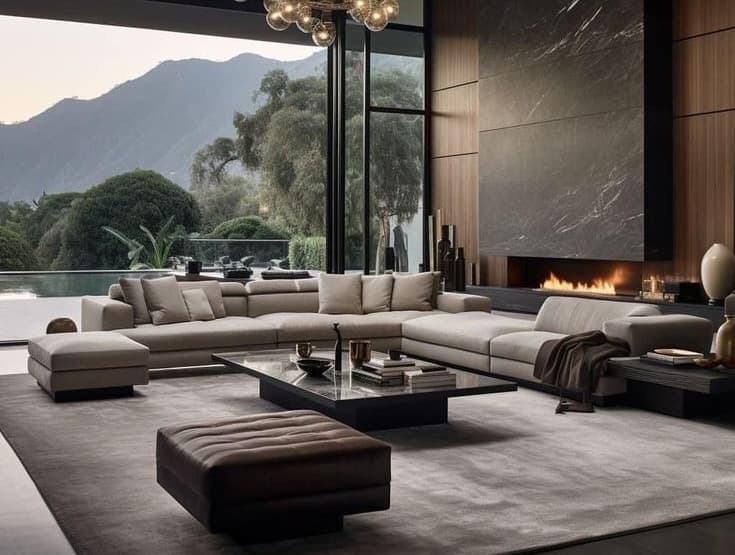
Beautiful Not Only in Renders: Why Even Strong Design Can Fail Without Author Supervision
In the premium segment, you evaluate not only the idea but the final result. A visualization may look flawless, but the true value of a project appears only when the completed space matches the original concept. This is where the key difference lies between a beautiful image and a professionally executed interior.
Your most common concern is completely valid: everything looks perfect in renders, but during construction proportions are lost, details are simplified, materials are replaced, and elements that created a sense of quality simply disappear. As a result, you end up with a space that does not match what you actually paid for.
Author Supervision: What It Really Means
Author supervision in a premium project is not about formal site visits or simply checking whether everything follows the plan. It is a systematic control of how the design concept is translated into real execution – from drawings and materials to construction details, joints, textures, and proportions.
In practice, most risks appear during the implementation phase. Contractors may simplify a construction detail, suppliers may suggest alternatives, and installers may adjust alignments for convenience. Without control, these changes accumulate unnoticed, but they are exactly what destroys the integrity of the space. That is why author supervision is not an optional service – it is an essential part of achieving a high-quality result.
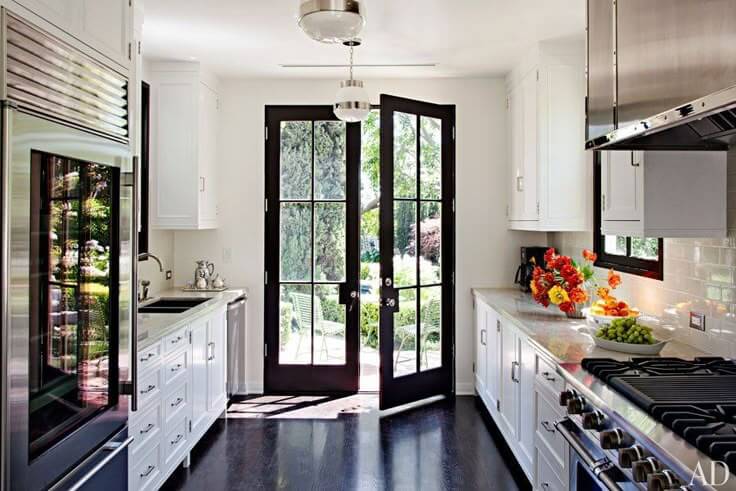
Where Projects Most Often Break Between Design and Reality
Most failures do not happen because of weak concepts, but because of a loss of precision in details. In renders, everything looks balanced because proportions, lighting scenarios, material transitions, and composition are carefully considered. In reality, just a few minor changes can make the space look cheaper or visually heavier.
The most common issues arise in three areas: materials, construction details, and execution discipline. A different shade of stone, an incorrect replacement of fittings, improper lighting height, or an inaccurate joint between surfaces – and a premium interior loses its level. That is why a strong project must not only be designed but also carefully brought to completion.
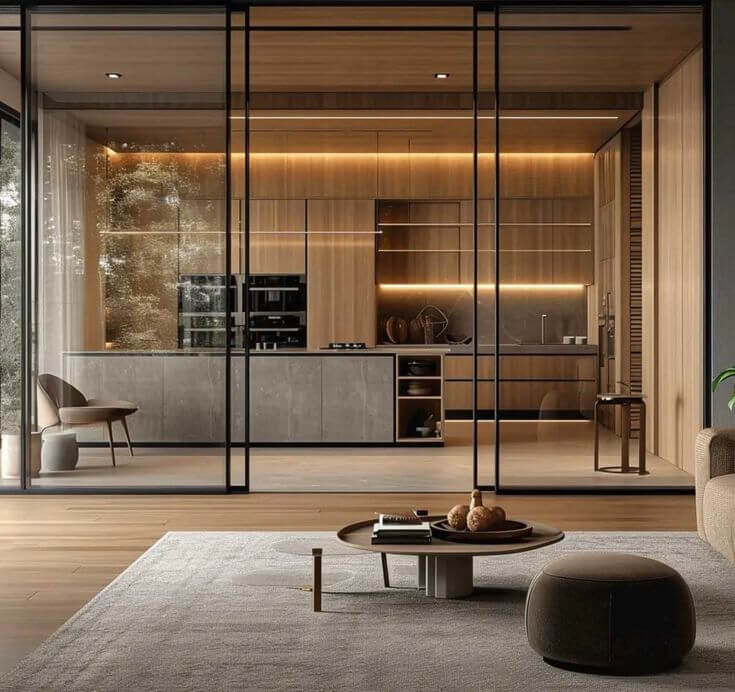
Why “Almost the Same” Does Not Work in Premium Interiors
In standard renovations, compromises often go unnoticed. In the premium segment, everything is different. Here, the quality of the space is formed not by one major decision, but by dozens of small elements that together create a sense of harmony, calmness, and a refined environment.
If you replace one material with a similar one, simplify a detail, remove part of hidden solutions, or fail to control geometry – the result may still be technically acceptable, but visually and tactually it will no longer be the same. That is why, when you invest in a villa, apartment, hotel, or restaurant, you expect not just completion, but precise execution of the concept in real space.
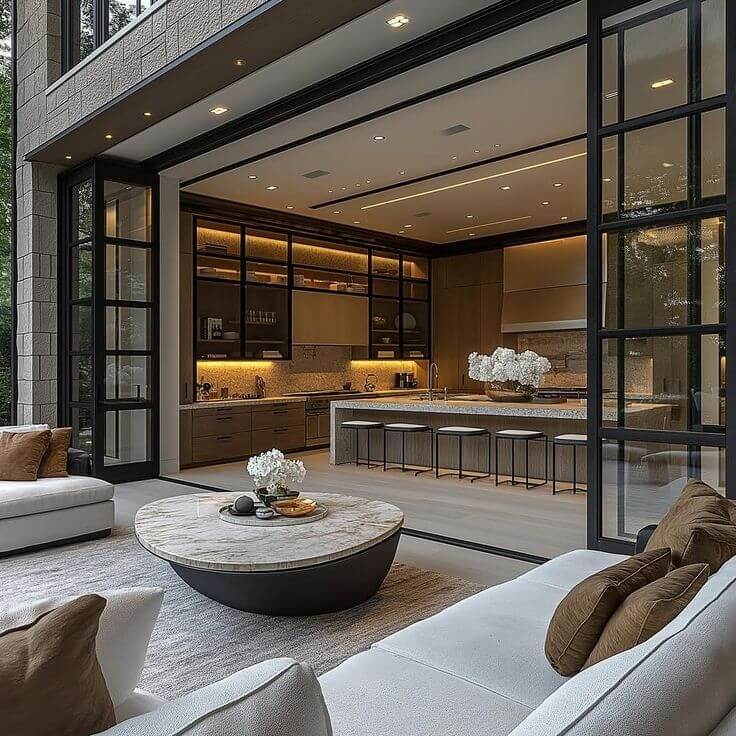
What Quality Control at Every Stage Gives You
When a project is professionally managed, every decision is verified not only in drawings but also during execution. This means the team controls material consistency, installation accuracy, preservation of proportions, precision of details, and the overall visual logic of the space.
In this model, you are not left alone at the stage where design most often fails. You do not need to evaluate whether a detail is implemented correctly, whether a material replacement is acceptable, or whether an important element has been lost. This is what defines true premium service: you receive a finished result, not the consequences of compromises.
Real Projects Matter More Than Beautiful Visualizations
A strong studio always thinks in terms of execution, not just presentation. What matters is not how impressive the concept looks on screen, but how accurately it can be implemented in a real project, considering materials, technical details, timelines, and quality standards.
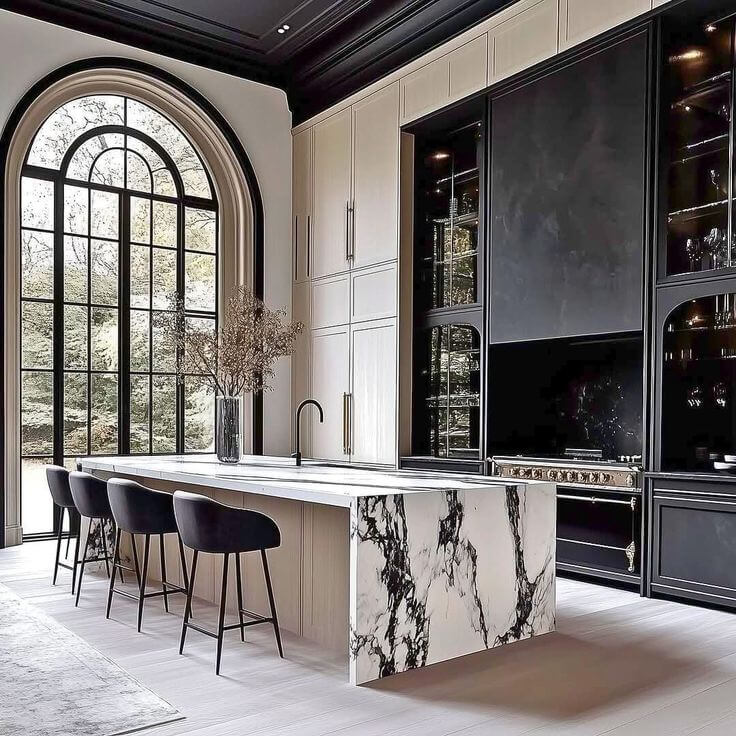
That is why Cult of Design approaches projects so that design does not remain just a beautiful idea. For us, it is not only about the visual concept, but about how the space will look after completion – in texture, lighting, details, and real everyday use. In premium interiors, the image must match reality, not exist separately from it.
Conclusion: Real Quality Begins After Design Approval
The weakest point of any interior project is the transition from visualization to execution. This is where it is decided whether the space will remain as intended or turn into a simplified version inspired by the original idea.
That is why, if you do not want to pay for beautiful renders without a real result, it is not enough to look only at a portfolio. What matters is how the studio controls the project, works with details, verifies materials, and maintains quality at every stage. Because in the premium segment, value is not defined by the image – it is defined by the precision of execution.
FAQ: Questions and Answers
1. What is author supervision in interior design?
It is the control of how implementation aligns with the approved project. It includes checking materials, construction details, installation solutions, proportions, and key elements on-site.
2. Why can a good design fail during construction?
Due to simplified technical solutions, material substitutions, incorrect installation, or lack of control at the transition from design to execution.
3. Are high-quality drawings enough?
No. Even strong documentation does not guarantee an accurate result without supervision. Execution always requires real-time control.
4. What mistakes most often ruin a premium interior?
Poor material substitutions, inaccurate construction details, broken proportions, incorrect lighting, simplified elements, and lack of quality control.
5. What is more important for you: renders or the finished space?
In the premium segment, the priority is the completed space that matches the concept. Visualization matters, but true value lies in precise execution.
-
 Rectangle & Square House At Brooklyn July , 20th, 2018
 -
 Discover Architecture Of Bario Lodge July , 20th, 2018
 -
 Rennovate Exterior With Garden On Top July , 20th, 2018